Tips for Choosing a Preschool from a Parent and Educator
By Kristen Powers
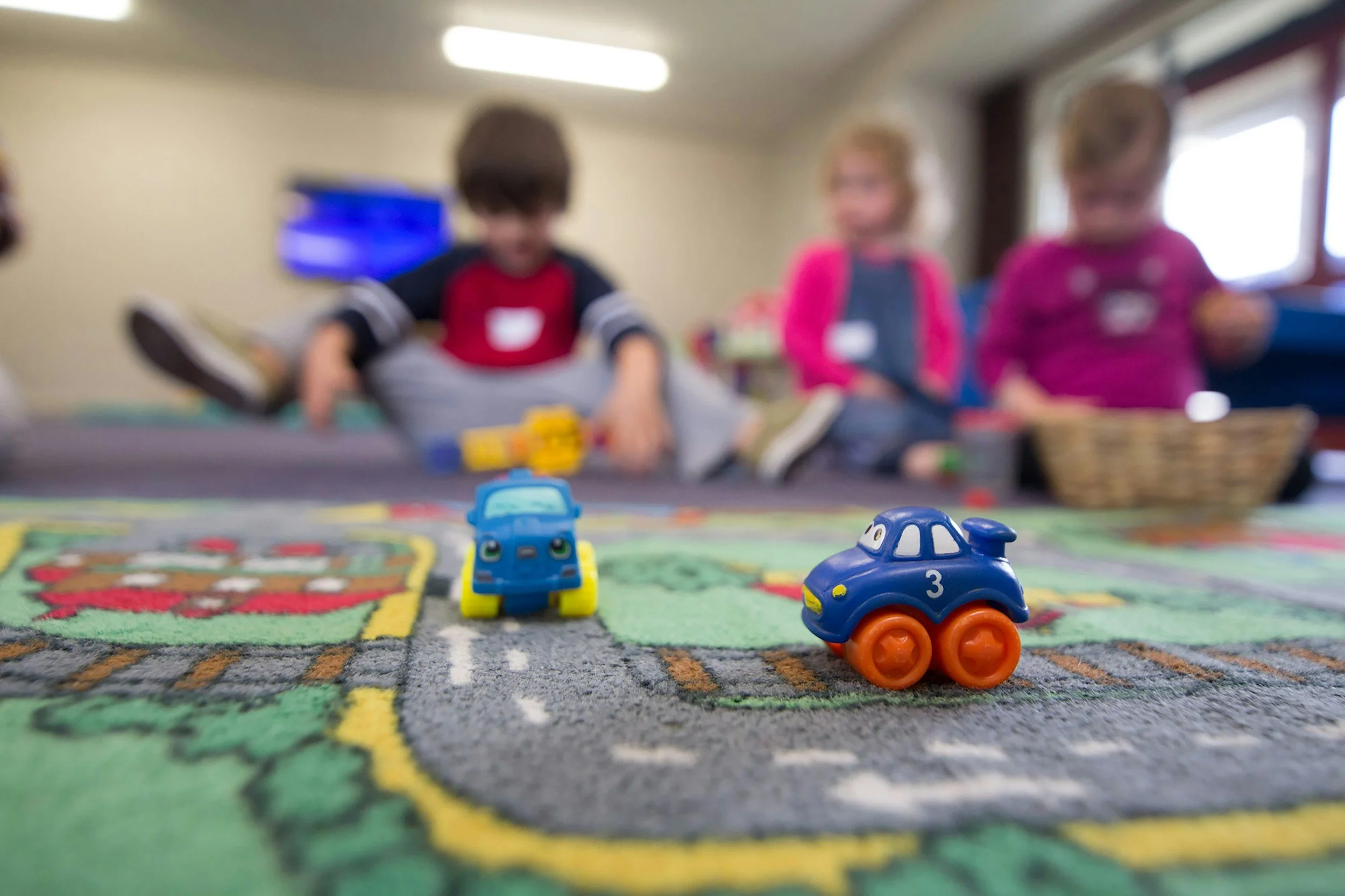
Choosing a preschool can feel surprisingly overwhelming. While preschool is often viewed as a child's first educational experience, the decision is about much more than academics. Families are often balancing schedules, childcare needs, logistics, educational philosophies, finances, and their child's unique personality all at once.
As both a parent and learning professional, I recently found myself navigating many of the same questions that families ask every day: Which preschool philosophy is the right fit? How much structure is appropriate? What role should convenience play in the decision? And how do you know if a school is truly a good fit for your child?
These questions became especially relevant as my family prepared for a cross-country move.
New beginnings are heading my family's way as we prepare for a move from the West Coast to the East Coast. While we have relocated several times before, now that my children are school-aged, moving has become more layered and complex as we balance what works best for everyone in our household and navigate finding new school environments for our children.
My older son is entering second grade, and I've already written about my experience finding a new elementary school for him. My younger son, Jake, is in preschool, which has been a vastly different experience than searching for a K–5 school.
Why Choosing a Preschool Felt Different Than Choosing an Elementary School
As an educator and learning professional, school placement is very much part of my professional world. You would think this process would feel straightforward for me.
However, preschool and early childhood education are not my primary areas of expertise. Outside of teaching one year of Pre-K nearly 15 years ago, I have limited experience navigating the different preschool pedagogical frameworks and learning options available for young children.
Fortunately, my wonderful colleague Rachel is an expert in early childhood education, and I leaned heavily on her guidance as I worked to better understand the options available for Jake and our family. I even used her guide to preschool philosophies as I researched schools and tried to get a clearer sense of what might be the best fit for him.
The more I learned, the more I realized that choosing a preschool is often less about finding the "best" school and more about finding the right balance between your child's needs and your family's daily realities.
What We Needed From a Preschool
While I wasn't entirely sure what I wanted for Jake, I did know what I did not want for him.
We are moving back to the same neighborhood where Timmy previously attended a Montessori school. While there were many lovely moments and experiences there, it ultimately became clear that it was not the best educational environment for him. He struggled with the highly self-directed learning approach and needed more opportunities for big-body movement, extended recess, physical activity, games, and sports.
Similarly, Jake's learning profile also benefits from plenty of kinesthetic learning opportunities and movement throughout the day.
Extended-Day Care and Schedule Flexibility
Due to our work schedules, longer daily hours are a necessity for our family. I work extended hours several days each week, so having on-site after-school care available was immediately a non-negotiable for us.
We need the flexibility for Jake to stay longer days when needed without the stress of a hard pick-up cutoff. Right away, I narrowed our search to preschools with extended-day options readily available.
Walkability and Community Connection
Walkability is a major factor for our family.
Living in an urban environment means there are no school buses, and parents are responsible for all drop-offs and pick-ups. As a family, we prioritize walkability and proximity to community spaces. We love the idea of afternoons spent stopping by the playground or library on the walk home from school.
We intentionally sacrifice other aspects of our lifestyle in order to live close to the neighborhood center where the schools, parks, libraries, and community spaces are located.
Features We Were Excited to Find
School-Provided Meals
Jake's current preschool previously incorporated a meal program into the school day, although for the 2026–27 school year, lunches are now provided by families.
For us, school-provided meals are a meaningful convenience that helps simplify busy mornings. While this was not necessarily a deal-breaker, it certainly felt like a valuable perk.
Music, Art, and Extracurricular Activities
At his current preschool, Jake has music class three times a week and art once a week. He absolutely loves these activities and thrives when he has opportunities to express himself creatively.
The new school offers daily music and art, along with optional afternoon soccer, which aligns beautifully with his interests and gives him additional opportunities for movement and social engagement outside the classroom.
Exploring a Different Preschool Philosophy
Jake's current preschool follows a Reggio Emilia-inspired approach. While there are many strengths and benefits to this pedagogical framework, I found myself increasingly interested in exploring a more traditional academic approach for him.
As the younger sibling, Jake constantly watches Timmy complete homework assignments and bring home school projects. He absorbs all of it.
He frequently asks to "play school" with his older brother. Timmy will have Jake sit on the carpet while he reads books aloud, asks him questions, and encourages him to raise his hand, mimicking his own classroom routines.
Timmy also loves to tell Jake about math centers, reading time, science exploration, and social studies projects. For Jake, this has become his narrative of what school is, and it is clearly something he is eager to participate in himself.
This experience reinforced something I often tell families: there is no universally "best" preschool philosophy. The best fit depends on your child's temperament, interests, learning style, and your family's priorities. Understanding the differences between approaches can be incredibly helpful, which is why I found Rachel's guide to preschool philosophies such a valuable resource throughout this process.
Listening to What My Child Was Telling Me
Given Jake's age, he simply does not yet have the cognitive ability to fully participate in conversations about choosing a preschool.
However, I have listened keenly to his preferences and reactions.
I notice his excitement on days with music class and dance parties, how much he loves extended recess and playing ball outside, and how engaged he becomes during story time, counting activities, and letter work.
During parent-teacher conferences, his educational team shared how much he enjoys sitting at the table for structured learning activities, practicing letter sounds and formation, and counting objects and early math skills.
While Jake cannot yet articulate what type of school environment he prefers, I know enough about his personality, interests, and learning style to feel confident that a more academic and traditional school environment with a strong curriculum is likely the best fit for him and for our family.
Educational Decisions Are Family Decisions
Because preschool is not my primary professional area of expertise, I relied more on my spouse throughout this decision-making process as we explored options together and tried to find our must-haves and nice-to-haves within one school community.
My partner's biggest priorities were walkability and extracurricular opportunities, and he was thrilled to learn that the preschool we ultimately chose offers afternoon soccer for Jake.
My priorities centered more around the provided lunch program and extended-day options since I manage much of the afternoon caregiving and household logistics.
Even at the preschool level, educational decisions are rarely about one single factor. They involve balancing logistics, values, personalities, family rhythms, and each child's individual needs while still honoring who your child is as a learner and person.
Final Thoughts on Choosing a Preschool
This process reminded me that preschool decisions are often as much about family fit as they are about school fit.
While educational philosophies matter, so do practical realities. A wonderful program that doesn't work with your family's schedule may create unnecessary stress, while a school that aligns with both your child's needs and your daily rhythms can help everyone thrive.
Ultimately, our goal was not to find the perfect preschool. It was to find a community where Jake can feel supported, challenged, known, and excited to learn.
As parents, we make the best decisions we can with the information we have. Sometimes that means weighing trade-offs, embracing uncertainty, and trusting what we know about our child. For our family, that meant finding a preschool that balances academics, movement, creativity, community, and the practical realities of everyday life.
Need Help Navigating Preschool Options?
With so many preschool philosophies, program models, and school options available, finding the right fit can feel overwhelming. Teach Play Learn's education consultants help families evaluate schools, understand educational approaches, and create personalized recommendations based on each child's unique needs and learning style.